Sep 9, 2025 | Walking Tours
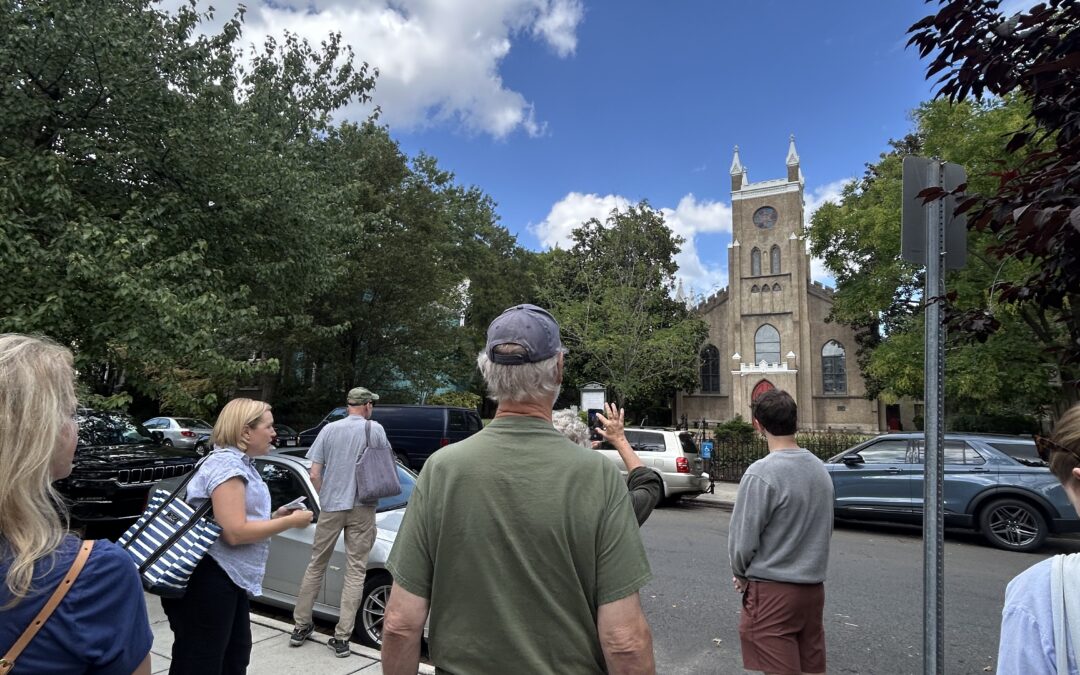
From hidden alleyways to green spaces to architectural gems, our four October walking tours let attendees discover more about Capitol Hill.
Here’s what the tours covered:
Capitol Hill Architecture: The changing tastes and practical decisions that informed builders’ choices. This is one of our oldest walking tours.
SE Alleys: Capitol Hill has many hidden alleys and charming one-block streets. Take a trip back in time to explore the workaday world of past residential and industrial uses and some of our most diverse populations. Another of our oldest walking tours.
Between Marion and Providence Parks: When Pierre L’Enfant developed his 1791 plan for the City of Washington, he established a network of public spaces and squares, linked by broad avenues. The residential neighborhood around the blocks that turned into Marion and Providence Parks (popularly referred to as Turtle and X Parks) has evolved into a rich tapestry of houses, schools, churches and buildings old and new, which we will explore on this tour. This incorporates some of our parks and infrastructure tour.
NE Alleys: The lifestyles, occupations, and shenanigans of the inhabitants; early industrial uses; and efforts both to eliminate and to preserve alley dwellings.
Sep 3, 2025 | Preservation Cafés
Preservation easements were the subject of a free online talk on September 25. Part of our Preservation Cafe series, the talk was led by staff of the L’Enfant Trust, which holds most of Capitol Hill’s easements. The talk was recorded and is available on YouTube.
An easement is a legal agreement that permanently protects a home’s historic character. Easements do not expire and “run with the land,” meaning that future owners are also bound by them.
Lauren McHale, the Trust’s president and CEO, and Katie Williams, its operations and communications manager, answered a variety of questions, including:
- How to donate an easement
- What makes a property eligible
- Responsibilities of easemented property owners
They also shared about the Trust’s Historic Properties Redevelopment Program in Historic Anacostia. Since 2013, the Trust’s HPRP has created affordable homeownership opportunities for the community by rehabilitating deteriorated, vacant historic properties.
You don’t have to own an easemented property to get help from the Trust, McHale said. She said the Trust is happy to offer guidance to anyone about a historic property. It has a full-time professional staff to advise owners on maintenance, preservation and architectural design review for proposed changes to the exterior.
The organization’s website has a toolkit for easemented property owners as well as guides to preserving historic exteriors and researching your historic property. The address is lenfant.org.
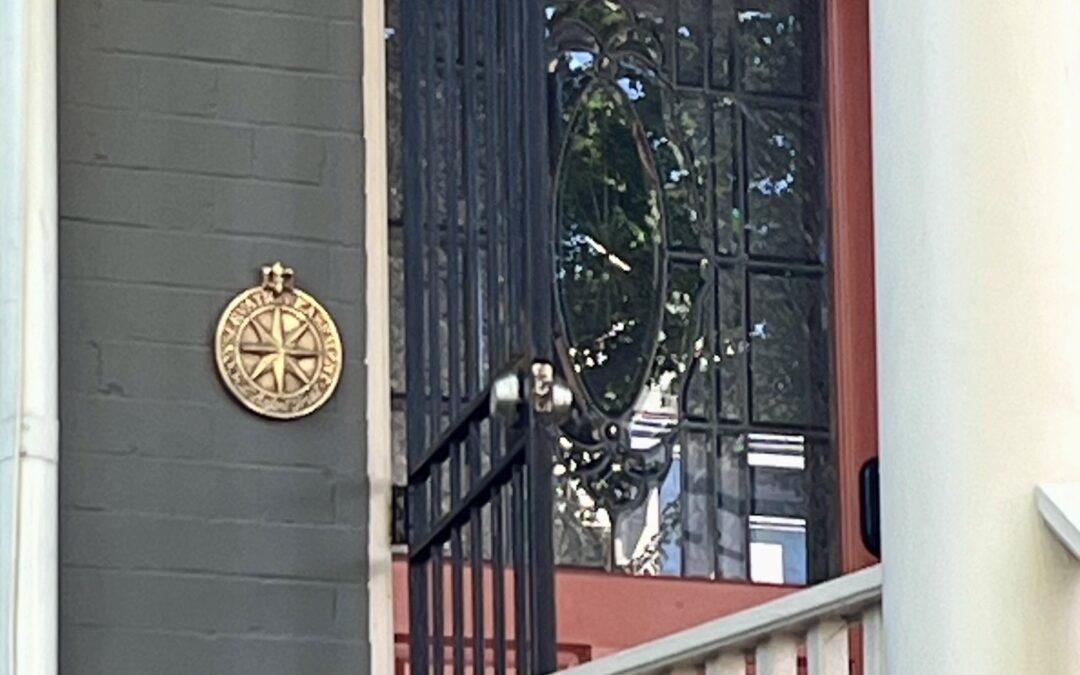
L’Enfant Trust easements are marked by round cast bronze plaques featuring a star. The Trust holds conservation easements on more than 1,150 historic DC properties. DC maintains a list of more than 1,700 properties citywide that are protected by conservation easements.
Do you have suggestions for a future Preservation Cafe? Let us know! Email us at caphrs420@gmail.com.
